The Complete Guide to Funding College: 529s, UTMAs, and Every Way to Get Money Out

Updated: Jun 10
You want to pay for your kid's college. That's clear.
What's not always clear is how, or which account, you should be putting the money into in the first place.
Most parents default to whatever they've heard of first. Sometimes that's a 529. Sometimes it's a custodial account. Sometimes it's just a savings account sitting somewhere earning almost nothing.
The problem is the wrong account can cost you tens of thousands of dollars in taxes, financial aid, or both.
In this blog, I'm going to break down the two main college savings vehicles, how they compare, and critically, every legitimate way to get money out of a 529 when the time comes.
If you're approaching a business sale, the year of the exit may be the best opportunity you'll ever have to fund your child's education. Read our guide on liquidity event planning here.
First, Let's Talk About the Problem
College costs are not slowing down.
The Consumer Price Index tells you what everyday goods cost. College costs its own version, and it
runs hotter. Tuition has historically increased around 5% per year. What costs $50,000 per year at a private university today could cost $80,000+ by the time your 5-year-old is 18.
Saving money in a low-yield savings account is not a plan. It's falling behind on purpose.
The accounts below were built to fix that.
The Two Main Options: 529 vs. UTMA
The 529 Plan
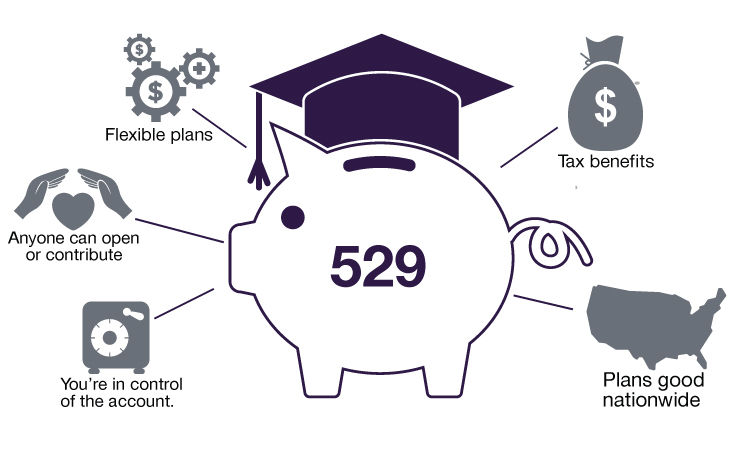
A 529 is a tax-advantaged savings account built specifically for education. You invest the money. It grows. You pull it out for qualified education expenses and pay zero federal taxes on the growth.
That's the core deal, and it's a good one.
Missouri residents get an extra bonus: you can deduct up to $8,000 per year, or $16,000 if you're married filing jointly, from your Missouri state income taxes for 529 contributions, and because Missouri has "tax parity," that deduction applies to contributions to any state's 529 plan, not just Missouri's own MOST plan.
You stay in control. The money is yours. And the account never expires.
The UTMA (Uniform Transfers to Minors Act)
A UTMA is a custodial account held in your child's name. You manage it until they reach adulthood, then it's legally theirs to do whatever they want with.
No restrictions on what the money is used for. No qualified expense rules. Total flexibility.
But that flexibility comes at a cost.
Taxes: In 2026, UTMA earnings above $1,350 are taxed at the child's income tax rate, and earnings above $2,700 are taxed at the parent's income tax rate. This is called the "kiddie tax," and it limits how much you actually benefit from your child's lower rate.
Financial aid: This is where it really hurts. On the FAFSA, parent-owned 529 plans are assessed at 5.64% in the expected family contribution calculation. UTMA accounts are considered student assets and assessed at 20%.
Put simply: if your student has a UTMA account with $20,000 in it, it's assessed as though 20% will go toward college costs, reducing financial need by $4,000. A 529 with the same $20,000 would only reduce need by about $1,128.
That's not a small difference. Over four years, the wrong account could cost your family tens of thousands in aid eligibility.
Control: With a UTMA, the child gains full control at age 18 to 21, depending on the state, and can use the money for any purpose. You cannot change the beneficiary. The money is theirs, period.
So Which One Wins?
Here's the honest answer: it depends on what you're trying to accomplish. And in most cases, having options is better than going all-in on one account.
A lot of families do both, a 529 for education savings and a UTMA for everything else. The 529 handles the tax-advantaged, education-focused bucket. The UTMA gives you flexibility if life goes sideways or your kid needs money for something outside of school. That combination can be a smart approach, and it's one worth having a real conversation about.
If the money is definitely going toward education, the 529 wins on taxes and financial aid, it's not close. But locking every dollar into an education-only account isn't always the right call either.
The best plan is usually one that gives you flexibility.
Every Way to Get Money Out of a 529
This is where most people stop reading, and where the real planning lives.
Most families know you can use a 529 for tuition. Far fewer know about the other exits.
1. Qualified Education Expenses (The Standard Route)
This is the one everyone knows. Withdraw money for qualified expenses and pay zero federal tax on the growth.
What counts in 2026:
For college and post-secondary: tuition, fees, room and board (if enrolled at least half-time), books and required supplies, computers, software, and internet access used for school, and trade or apprenticeship programs.
For K-12: starting in tax year 2026, the annual limit for K-12 expenses is $20,000 per student. Qualifying expenses now include tuition, books, tutoring, homeschool curriculum, test fees, vocational training, and educational therapies including support for learning differences like ADHD.
For credentialing programs: 529 funds can now be used for qualified postsecondary credentialing expenses, including tuition, fees, books, supplies, and equipment for recognized credential programs.
2. Your Kid Gets a Scholarship
This is the one most parents have never heard of, and it matters.
If your child receives a tax-free scholarship, you can withdraw an amount equal to the scholarship from the 529 without paying the 10% penalty. You'll still owe income tax on the earnings portion of that withdrawal, but the penalty is waived.
So if your kid earns a $25,000 scholarship, you can pull $25,000 out of the 529, pay ordinary income tax on the earnings, and keep the rest. The money doesn't disappear. It just changes form.
This exception also applies to fellowships, employer education assistance, and attendance at a U.S. military academy.
3. Roll It Into a Roth IRA
This is the rule that killed the biggest fear about 529s.
For years, parents worried: what if my kid doesn't use it all? Now there's a clean answer.
For distributions made after December 31, 2023, unused 529 funds can be rolled into a Roth IRA for the beneficiary.
The rules:
The 529 must have been open for at least 15 years. The lifetime rollover limit is $35,000. Contributions made within the prior 5 years cannot be rolled over. The rollover is subject to annual Roth IRA contribution limits, $7,500 in 2026, or $8,600 if age 50 or older, and the beneficiary must have earned income at least equal to the rollover amount.
Open a 529 when your child is born. If they get a full ride or take a different path entirely, those funds, after 15 years, can become a retirement account head start. That's a powerful outcome either way.
4. Change the Beneficiary
You don't have to cash anything out. You can change the designated beneficiary to another member of the family with no tax consequences.
Oldest kid gets a scholarship? Move the money to the next child, a grandchild, a niece, or nephew. You can even move it to yourself for a graduate degree.
The account doesn't lock you in. It travels with your family.
The Bottom Line
College funding isn't a one-size-fits-all decision. But it is a decision — and making it by default almost always costs you money.
The 529 remains the most efficient vehicle for most families. Better tax treatment. Better financial aid impact. More control. And more ways out than most people realize. But pairing it with a UTMA for flexibility is a strategy worth considering, depending on your goals.
The earlier you start, the more time your money has to work. A few hundred dollars a month invested at birth looks completely different by the time your kid is 18.
Want to see how this all fits together? Watch our full breakdown on college funding strategies on YouTube, here.
If you are looking for a financial advisor, watch our YouTube video on 10 questions you should ask when interviewing a financial advisor.
Get in Touch With An Advisor
Frequently Asked Questions
Here are some answers to questions I received frequently about this topic.
Can grandparents contribute to a 529 without it hurting financial aid?
Moment Private Wealth serves clients as a fiduciary 100% of the time.
What happens to the money inside the DAF after I contribute it?
Under the updated FAFSA rules that took effect in 2024, grandparent-owned 529 distributions no longer count as student income on the FAFSA. This was a major change. Grandparents can now contribute directly or even own their own 529 for a grandchild without the financial aid penalty that existed under the old rules.
How are you different than other financial advisors?
We are specialists in working with professional athletes and entrepreneurs. We limit the number of new clients we take on. This allows us to provide unparalleled value and highly personalized service to professional athletes. We work as a team to service our clients. We believe in building a team of “A” players. This ensures our clients receive world-class tax, estate, insurance, and investment strategies. We focus on educating first, then executing.
What if I have multiple kids? Do I need a separate 529 for each one?
No. You can open one account and change the beneficiary as needed. Many families fund a single 529 and shift it toward whichever child needs it most. You can also split an account or open separate ones per child; there's no rule requiring one approach over the other.
How do you work with other members of my team? We believe in the power of the team. For most of our clients, their team consists of Moment Private Wealth, an accountant, an attorney, a banker, and an insurance specialist. We help our clients build out their team of individuals or work with existing partners that the clients have. Our goal is to ensure every family has a team of experts to protect their interests.
*Moment Private Wealth offers information on tax and estate planning that is general in nature. Tax and Legal advice are not provided by Moment Private Wealth. Consult an attorney or tax professional regarding your specific legal or tax situation.


Comments